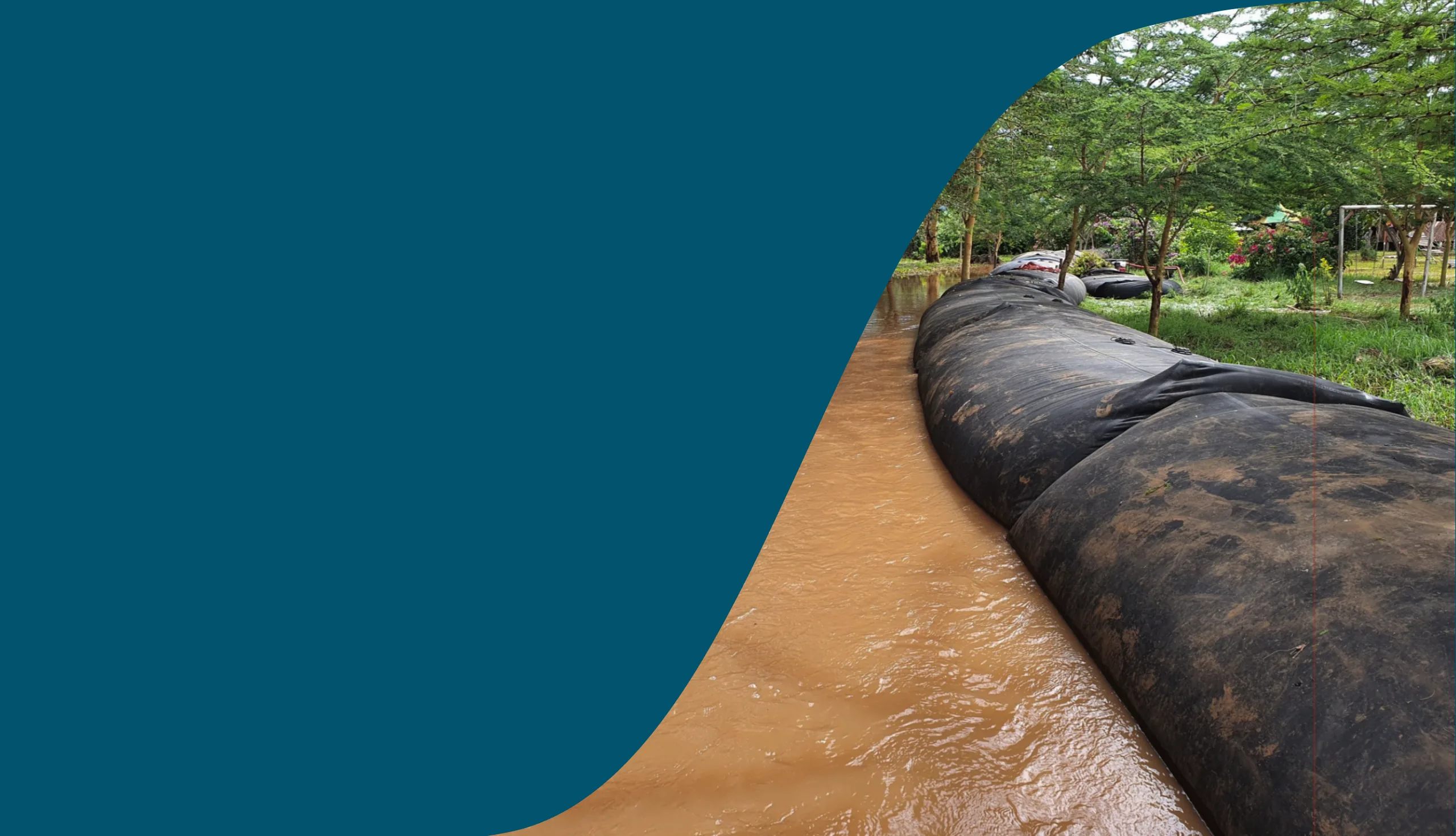
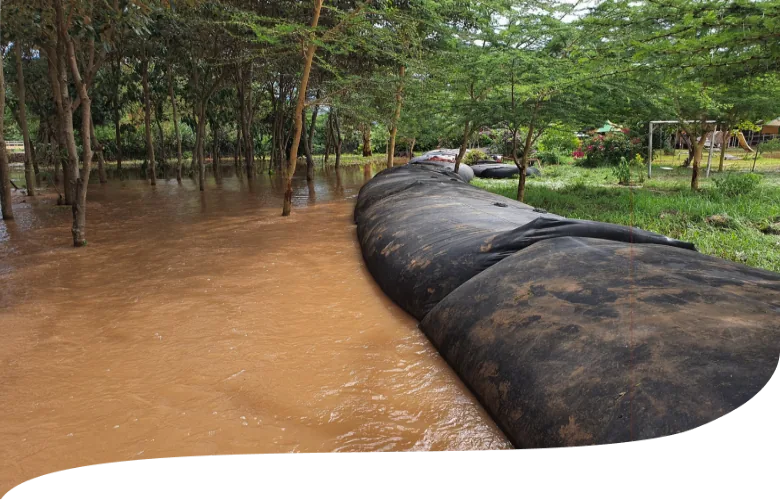
SLAMDAM barrier holding back floodwater among trees

Home » Flood Control Solutions » Flood Barrier » SLAMDAM

SLAMDAM Mobile Flood Barrier

SLAMDAM is WaveSave’s water-filled mobile flood barrier: connected 5-metre units of reinforced EPDM that are filled with local water on site, and emptied, stored and reused after the flood.

What is SLAMDAM?

SLAMDAM is a mobile flood barrier designed to provide rapid and effective flood protection. Unlike traditional flood defenses, SLAMDAM can be deployed quickly. This innovative solution ensures immediate response to flood threats. For an overview of mobile flood barriers and how they are used, see Mobile Flood Barriers.

Water storage

After a flood, SLAMDAM can stay in place and store water for the dry season.

Agricultural land protection

SLAMDAM helps protect farmland, crops and irrigation infrastructure against seasonal floods and overflowing rivers.

Urban flood protection

SLAMDAM provides rapid, temporary flood protection for residential areas, streets, public buildings and critical infrastructure.

Industrial site protection

Reusable SLAMDAM barriers around industrial sites help limit water ingress, damage and operational downtime.

Technological advancements

Technological advancements

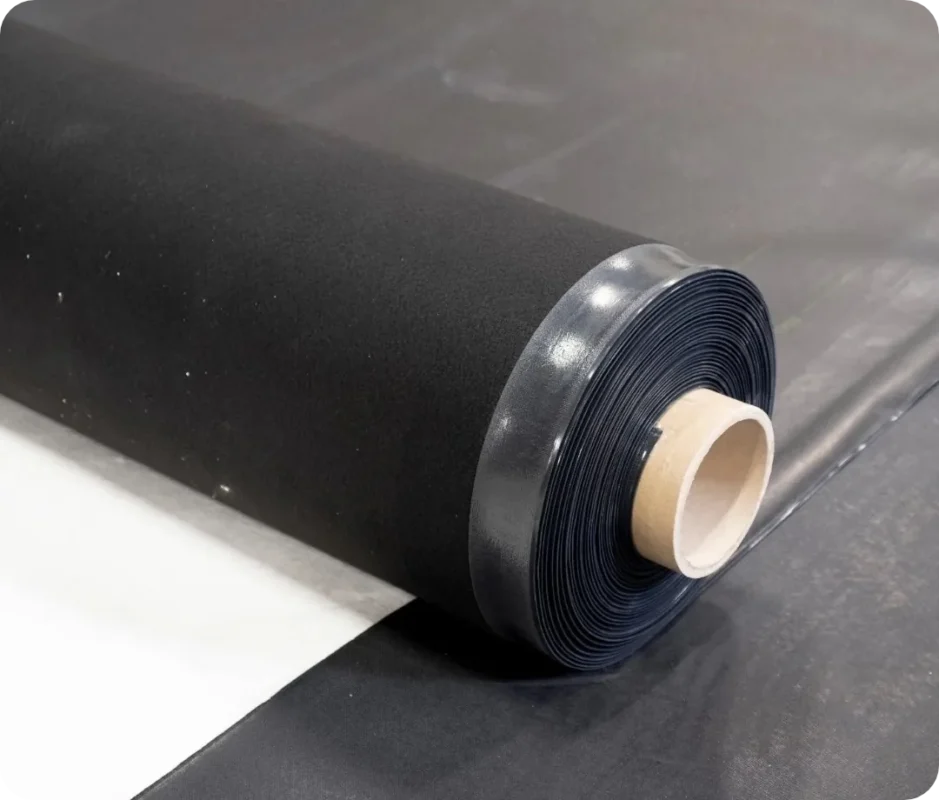
Roll of black SLAMDAM barrier material

Innovative materials

SLAMDAM uses EPDM (ethylene propylene diene monomer) for its construction. This material offers several advantages:

  • EPDM withstands extreme temperatures and environmental conditions.
  • It adapts to uneven surfaces, ensuring a secure seal.
  • EPDM is resistant to chemicals, acids, and alkalis.
  • The barriers are reused for future flood events instead of being discarded after use.
 
Roll of reinforced EPDM, the material SLAMDAM is made of

Patented Dual-Compartment Design

SLAMDAM features a unique dual-compartment design that enhances stability and performance:

  • The two compartments support each other under pressure, preventing collapse.
  • The design withstands high water levels and external forces.
  • The system remains stable and effective, even under extreme conditions.
  • The design is effective for various types of ground surfaces.
 
Diagram of the two SLAMDAM compartments: 1x water pressure from outside, 5x counterpressure inside

Smart Technology Integration

SLAMDAM incorporates advanced technology to improve monitoring and control:

  • Customized software solutions to support the location and estimate the impact.
  • Sensors monitor water levels, pressure, and structural integrity.
  • Data is transmitted to a central system for continuous monitoring.
  • Alerts notify operators of potential issues, enabling quick responses.
Satellite image of a town next to a large area of floodwater shown in blue

Scalable System Easy to Handle

SLAMDAM’s modular design allows for easy deployment, scalability and customization:

  • Connect multiple units easily to form longer barriers as needed.
  • Suitable for small-scale and large-scale applications.
  • Units can be folded and stored compactly, simplifying transportation and deployment.
  • Standard units are lightweight, allowing for easy and rapid handling.
 
Team carrying SLAMDAM storage crates, with stacked crates in the background

Features and key benefits

Dual functionality

One barrier, two uses: flood protection when water rises, water storage when it is dry.

Reliable performance

The patented dual-compartment design was tested by TÜV Nederland and ensures stability and resistance under pressure.

Cost effective

Made from durable, reinforced EPDM, SLAMDAM can be emptied, stored and reused, reducing overall costs.

Quick deployment

SLAMDAM is designed for rapid setup, enabling swift action in emergency situations.

Versatile applications

Suitable for various environments, including urban, rural, and industrial areas.

Easy to store

Empty units fold into stackable crates of 60 by 80 cm, ready for reuse.

SLAMDAM specifications

The main facts about SLAMDAM at a glance. More detail is in the frequently asked questions below.

Feature SLAMDAM
Unit size 5 metres long; 67, 100 or 120 cm high. Custom sizes are possible within limits.
Retaining height About 50, 80 and 100 cm of water respectively; the 100 cm unit is used most.
Volume 4,500, 8,000 and 12,000 litres of water per unit respectively.
Weight when empty 32, 50 and 65 kg respectively.
Material and design Reinforced EPDM, UV- and ozone-resistant, with a patented dual-compartment design.
Filling On site, with locally available water and a pump. Filling time depends on the number and capacity of the pumps and the distance to the water source; with a high-pressure pump of 1,200 litres per minute, a 67 cm unit (4,500 litres) can be filled in about five minutes.
Deployment As a rule of thumb, one day for up to 500 metres of barrier; more people and pumps make it faster.
Surfaces Asphalt and concrete; grass, compacted soil, clay or sand, depending on the site. Not on loose sand, such as a beach.
Storage and maintenance Stackable crates of 60 by 80 cm. Drain and, if needed, rinse the units; small punctures can be repaired with self-adhesive tape or an EPDM patch.
In use No topping up needed while in use; the units can be repaired while filled.
Temperature range From −35 °C to +120 °C.
Reuse Emptied, folded, stored and reused for future floods.
Lifespan The material lasts 40+ years.
Warranty Five years on the EPDM membrane and three years on the seams, counted from delivery, for defects in material or workmanship under normal use.
Buy, rent or lease SLAMDAM can be bought, rented or leased. WaveSave can also keep the barriers in local stock and deploy them for you under a service contract.
Water storage Dual-purpose: SLAMDAM can also store water in the dry season.
Independent tests TÜV Nederland leakage test (2013, PAS 1188 procedure); full-scale wave test in the Delta Flume of Deltares (2024, waves of about 1.35 metres); NAHRIM Hydro Product Testing Certificate (2026).

SLAMDAM Successfully Tested at Deltares

In 2024, SLAMDAM underwent full-scale (1:1) wave testing at the Delta Flume of Deltares, an independent Dutch research institute.

The tests involved a 1-metre-high, water-filled SLAMDAM flood barrier, constructed from reinforced EPDM rubber. Two configurations were evaluated: placement on a flat concrete surface and installation along the edge of the flume to simulate temporary dike reinforcement.

During the trials, SLAMDAM was subjected to repeated wave impacts under varying water levels and wave conditions, withstanding waves reaching approximately 1.35 metres in height.

The tests examined structural integrity, stability, barrier movement and resistance to wave overtopping. Video recordings and measurement markings were used to observe the barrier’s behaviour under wave loading.

The findings provided valuable insights into SLAMDAM’s performance and contributed to the further development of the system.

Watch the official Deltares testing video

Team carrying SLAMDAM storage crates, with stacked crates in the background

Practical deployment and use

  1. Assess the site and the line of the barrier; the ends must rest against a structure or rising ground.
  2. Unfold the units and position them along the line.
  3. Connect the units.
  4. Fill them with water using a pump or a fire truck, and close the caps.
  5. Check the barrier while the water is high.
  6. Afterwards, drain the units, rinse them if needed, fold them and store them in their crates.

Training and support. We train local teams to deploy and maintain SLAMDAM, and assist with installation and support.

Selected projects and case studies

See all projects

SLAMDAM: frequently asked questions

Which heights are available?

Standard SLAMDAM units are 5 metres long and 67, 100 or 120 cm high. They retain water up to about 50, 80 and 100 cm respectively; the 100 cm unit is used most. Custom sizes are possible within limits. Higher or longer models may need heavy equipment to deploy instead of manual handling.

Filling time depends on the number and capacity of the pumps and the distance to the water source. With a high-pressure pump of 1,200 litres per minute, a 67 cm unit holding 4,500 litres can be filled in about five minutes; pumps with a higher or lower capacity, or a fire truck, can also be used. As a rule of thumb, we plan one day for up to 500 metres of barrier; more people and pumps make it faster. In Gilgit-Baltistan, Pakistan, 200 metres of SLAMDAM was deployed within one day, including transport and site preparation.

As an indication, two people can deploy 100 metres of the 67 cm unit in about an hour. In practice it often takes longer, for example with a smaller pump or when the water has to be pumped uphill. It depends on the number of people, the number and type of pumps, and the distance to the water source.

SLAMDAM adapts to minor irregularities in the ground. Hard, stable surfaces such as asphalt and concrete are normally straightforward; deployment on grass, compacted soil, clay or sand should also be possible, depending on the site. Loose sand, such as a beach, is not suitable, because water can flow underneath the barrier. The ends of the barrier must rest against a fixed structure or run uphill, so that water cannot flow behind it. Where needed, we level the ground and remove sharp objects first.

Yes. SLAMDAM can be filled with seawater as well as fresh water.

Yes. In Maasland, the Netherlands, SLAMDAM formed a temporary basin for polluted firefighting water. Whether it suits other liquids depends on the substances in them; we check those against the chemical resistance list of its EPDM.

The units are stored in stackable crates of 60 by 80 cm. Maintenance is limited to draining the barriers and, if needed, rinsing them with water. Small punctures can be repaired with self-adhesive tape or a patch of EPDM and glue. We train local teams to deploy and maintain SLAMDAM. In our experience, people can learn to deploy SLAMDAM within a day, even without a technical background.

Yes. In 2013, TÜV Nederland witnessed leakage tests on SLAMDAM units of 66 cm high: they met the leakage requirements at water levels up to 50 cm, based on the PAS 1188 test procedure (attest of testing 2013-A-166; a Portuguese version was co-signed by TÜV NORD Group Brazil). In 2024, SLAMDAM was tested at full scale with waves in the Delta Flume of Deltares in the Netherlands, withstanding waves of approximately 1.35 metres. At the end of 2025, NAHRIM, Malaysia’s national hydraulic research institute, tested a 30-metre barrier of six connected units in its hydraulic laboratory; on 26 January 2026 it issued a Hydro Product Testing Certificate.

In Pakistan, Kenya, Uganda, Burundi, Nigeria, Fiji, Iceland, Malaysia, Thailand, the Philippines, Serbia, Belgium, the Netherlands and the United States. Examples include river flood control in Rumuruti, Kenya and harbour protection at the Port of Grindavík, Iceland.

For locations with strong currents, significant wave action, floating debris or erosion, we first assess the site. We combine hydrodynamic analysis with local experience to choose the right configuration, and check that deploying the barrier does not cause damage elsewhere.

WaveSave: resilient water
control solutions

Selected organisations

Trusted by partners and clients

Selected organisations, institutions and partners WaveSave has worked with across flood resilience, drought resilience and water management.


World Bank logo
Government of the Netherlands logo
UN Environment Programme logo
UK aid logo
African Development Bank Group logo
JW Marriott logo
Climate Technology Centre & Network (CTCN) logo
Asian Disaster Preparedness Center (ADPC) logo
Adaptation Fund logo
Aga Khan Rural Support Programme (AKRSP) logo
SNV logo
Fiji Government logo
Republic of Uganda, Ministry of Water and Environment logo
Hoogheemraadschap van Delfland logo
Waterschap Brabantse Delta logo
Hoogheemraadschap van Rijnland logo
Vegagerðin logo
Coat of arms of Burundi


Ready to discuss your water resilience challenge?

We help governments, utilities and resilience programmes move from water risk to practical action.