As El Niño Strengthens, Kenyan Communities Fight Floods with Water

In Laikipia County, local teams are putting SLAMDAM mobile flood barriers back to work as East Africa prepares for potentially heavy rains. The same equipment can also retain water for use when conditions turn dry.

Kenya Braces Itself for El Niño

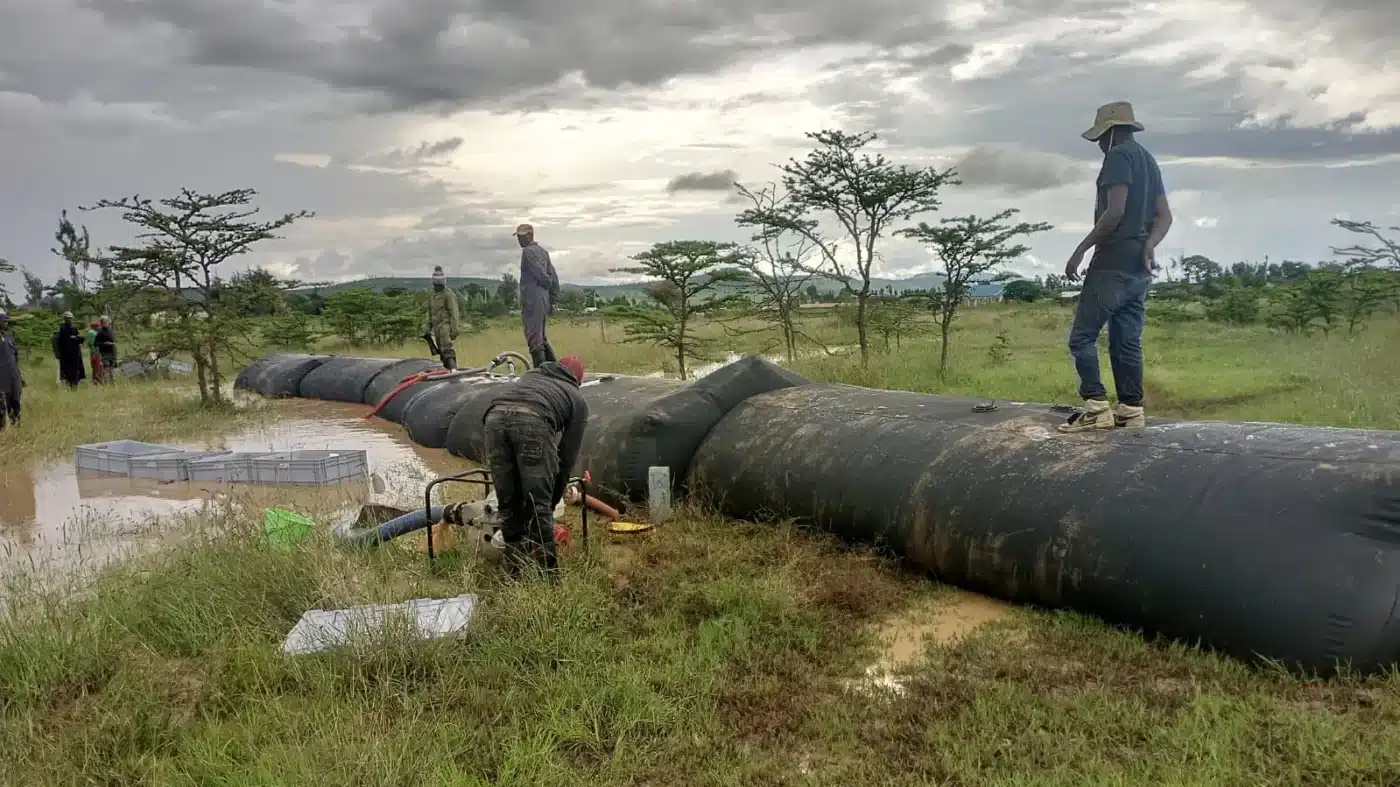
On the north-western slopes of Mount Kenya, preparations for the rainy season look a little different. Long black tubes stretch across the fields. Pumps and hoses are being connected, and local teams are filling the barriers with water.

At first it seems an unlikely way to stop flooding: using water to hold back water. Yet that is exactly how SLAMDAM works. Filled on site, the flexible barriers help contain or redirect rising water. The water inside them can later be put to other uses, including irrigation and tree planting.

Photographs shared with WaveSave in October 2026 show the system in operation in the Ngusishi River sub-catchment of Kenya’s Laikipia County. They also show something equally important: equipment first introduced through an earlier resilience project is being used again by the communities it was intended to help.

  • SLAMDAM Deployment
  • WaveSave
  • 2026
  • Reading time: 3 min
Workers preparing SLAMDAM mobile flood barriers on grassland in Laikipia, Kenya

Local teams operating SLAMDAM flood barriers in Laikipia County in October 2026.

A powerful El Niño brings renewed flood concerns

On 8 October 2026, NOAA’s Climate Prediction Center reported that El Niño was continuing to strengthen, with a greater than 83% chance of strong-to-very-strong conditions lasting into early 2027. Forecasts suggest it could become one of the most powerful El Niño events on record — sometimes referred to as a ‘super El Niño’.

For Kenya, the local outlook is particularly relevant. The Kenya Meteorological Service Authority’s forecast for Laikipia gives a 50% probability of above-normal rainfall for October to December 2026 and warns of possible flash floods and overflowing rivers. The regional climate centre ICPAC also expects wetter-than-normal conditions across substantial parts of Eastern Africa.

Seasonal forecasts cannot predict which individual farms or villages will flood. But they give communities a reason to prepare, especially in areas that have already experienced damaging rainfall.

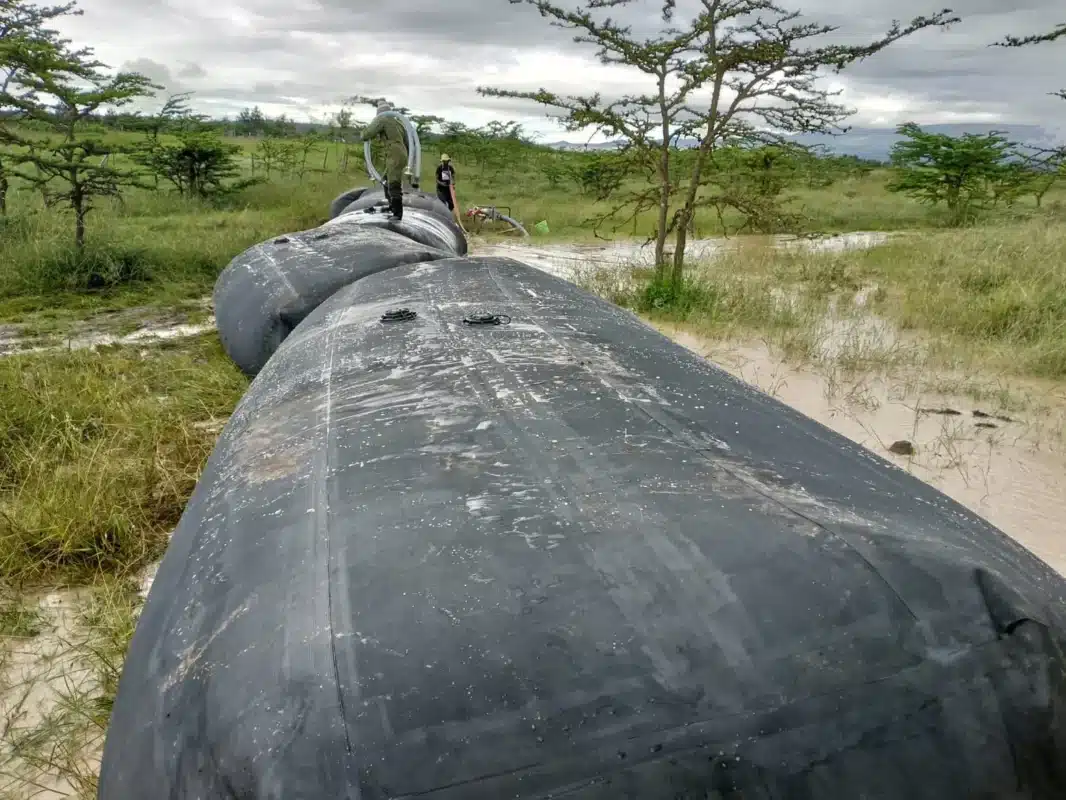
SLAMDAM flood barrier on wet grassland in Laikipia, Kenya

Water-filled sections beside flooded land in the Ngusishi sub-catchment.

Building on experience since 2023

WaveSave began working with Kenyan partners on flood and drought resilience in 2023, bringing together mobile flood barriers, local knowledge and practical training. One of the organisations involved is the Ngusishi Water Resources Users Association (WRUA), which manages shared water resources in a catchment stretching towards Ole Naishu.

The association grew out of local efforts to resolve water-sharing disputes and now manages approximately 20 water projects serving more than 10,000 people, according to its project report. That experience matters: effective flood protection depends on knowing where water flows, who is at risk and who will maintain the equipment.

The earlier work has produced encouraging results in different parts of Laikipia. In Rumuruti, a 150-metre SLAMDAM deployment helped protect homes and a water treatment facility during the 2024 rains. In Chumvi and the Ngusishi area, project reporting describes reduced flood damage and stored water used for small-scale irrigation and tree planting.

Samuel Wanjohi, Chairman of the Ngusishi WRUA, described those benefits in an earlier testimonial: ‘The barrier has protected many families and enabled us to use stored water for tree planting’.


How SLAMDAM protects land and retains water

SLAMDAM is a mobile flood barrier developed in the Netherlands. A standard section is approximately five metres long and one metre high and holds around 8,000 litres of water. The sections can be transported empty, laid out along vulnerable areas and filled with water using portable pumps. Several sections can be connected to form a longer line of protection.

There is an important distinction: the water pumped inside the barrier gives it stability, while the floodwater outside is held back or redirected. The water inside the barrier can later be recovered for suitable non-drinking uses, such as irrigation, where its quality permits. Once emptied, the barrier can be folded, stored and used again.

For farming communities facing both floods and dry periods, that dual function is especially useful. One piece of equipment can help protect crops when rainfall is excessive and make water available for other uses when it is no longer needed for flood protection.

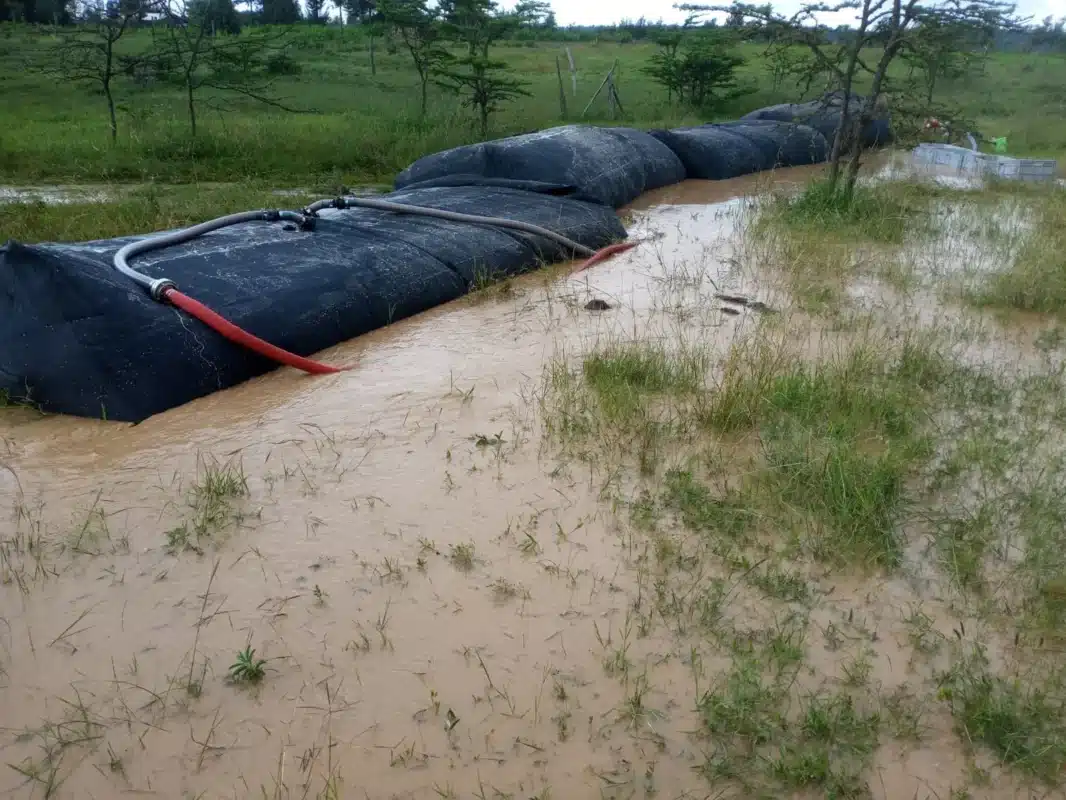
SLAMDAM barriers holding back muddy floodwater in Ngusishi, Kenya

Connected SLAMDAM sections and filling hoses beside floodwater.

Preparing together in October 2026

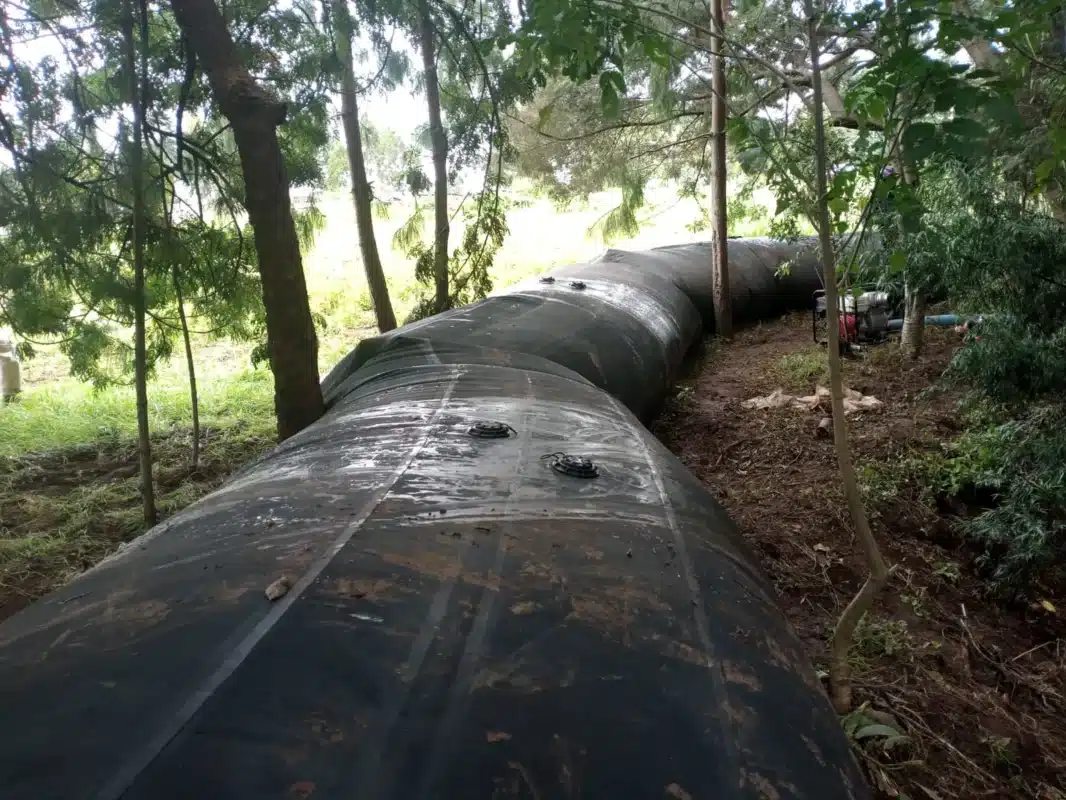
The new photographs show SLAMDAM sections positioned in open fields and wooded areas, with pumps and filling hoses in use and muddy water already visible alongside the barriers. They document current deployment activity, rather than simply a demonstration of the equipment.

The fact that local teams are putting the barriers to work again is an encouraging sign for the longer-term value of the project. Training, clear responsibilities, regular checks and the ability to respond quickly all matter alongside the equipment itself.

No mobile barrier can eliminate flood risk, and the outcome of the 2026 rainy season is not yet known. What the work in Laikipia does show is that communities can build practical preparedness over time, rather than starting again whenever heavy rains are forecast.


SLAMDAM flood barrier laid along the edge of a wood in Kenya

SLAMDAM in a wooded part of the Ngusishi sub-catchment.

From flood protection to longer-term water resilience

The challenge in Laikipia is not only to prevent water from reaching homes and fields. It is also to make better use of water when it is available. That is why WaveSave works across flood protection, water storage, monitoring and wider water-management solutions, adapting the approach to local conditions.

As another rainy season develops in Eastern Africa, the SLAMDAM deployments offer a practical example of that approach. Technology helps, but the real progress is visible in the people who know where to put it, how to operate it and why it matters.

Learn more about SLAMDAM mobile flood barriers and our flood protection and water storage work in Kenya, or contact WaveSave to discuss flood preparedness and water resilience projects.